
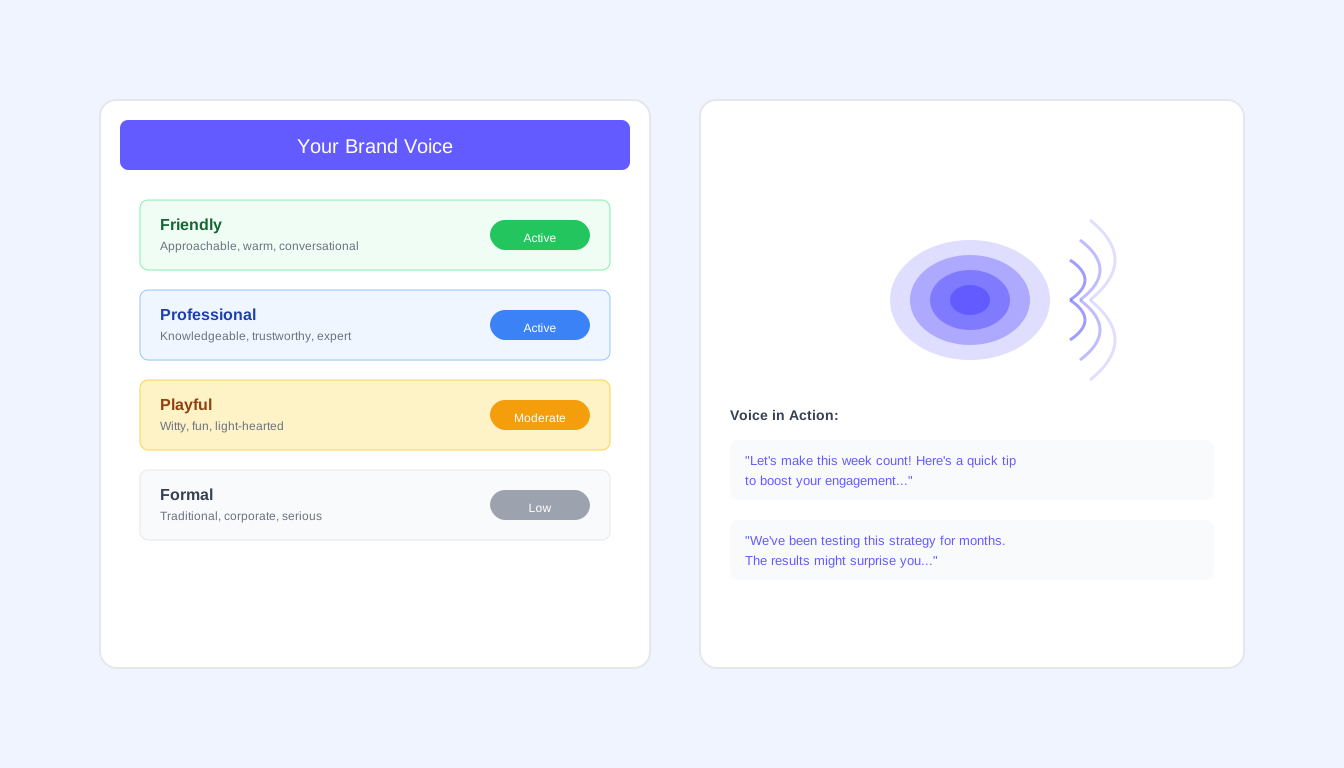
Scroll through your social feed. Some brands are instantly recognizable—not just by their logo, but by how they speak. That's brand voice. And in a world where everyone's fighting for attention, a distinctive voice is your secret weapon.
What Is Brand Voice?
Brand voice is the consistent personality your brand expresses through words. It's not just what you say—it's how you say it.
Voice vs. Tone
Voice is consistent—it's your brand's personality. Think of it as your brand's character.
Tone adapts to context—it shifts based on situation while maintaining the same underlying voice.
Example:
- Voice: Friendly, knowledgeable, slightly playful
- Tone in celebration post: Excited, energetic
- Tone in crisis communication: Calm, empathetic, still friendly
Why Brand Voice Matters on Social Media
Standing Out
Millions of posts compete for attention. A distinctive voice makes you memorable.
Building Trust
Consistency breeds familiarity. Familiarity breeds trust.
Creating Connection
People connect with personalities, not corporations. Voice humanizes your brand.
Guiding Content Creation
A defined voice makes content creation faster and more consistent—especially across teams.
Enabling Recognition
Your audience should recognize your content even without seeing your logo.
Defining Your Brand Voice
Step 1: Know Your Audience
Before deciding how to speak, understand who you're speaking to:
- Demographics (age, location, profession)
- Psychographics (values, interests, pain points)
- Communication preferences
- Platform behaviors
Step 2: Analyze Your Current Voice
Look at your existing content:
- What words do you use frequently?
- How formal or casual is your language?
- What emotions does your content evoke?
- Are there inconsistencies?
Step 3: Define Your Brand Personality
If your brand were a person, who would they be?
Exercise: Pick 3-5 adjectives that describe your brand:
- Professional or casual?
- Serious or playful?
- Traditional or innovative?
- Formal or conversational?
- Authoritative or approachable?
Step 4: Create Voice Guidelines
Document your voice with specific guidance:
Voice Characteristics:
| Trait | Do | Don't |
|---|---|---|
| Friendly | Use conversational language | Sound robotic or corporate |
| Expert | Share insights confidently | Be condescending |
| Playful | Use occasional humor | Force jokes or be inappropriate |
Vocabulary Guidelines:
- Words we use: "Let's," "together," "discover"
- Words we avoid: "Actually," "obviously," "just"
Grammar and Style:
- Contractions? (We're vs. We are)
- Sentence length? (Short and punchy vs. longer explanations)
- Emoji use? (Frequent, occasional, never)
Step 5: Create Examples
Abstract guidelines only go so far. Provide concrete examples:
On-brand: "We just launched something we're really excited about. Can't wait to show you!"
Off-brand: "We are pleased to announce the release of our new product offering."
Brand Voice Across Platforms
Your core voice stays consistent, but expression adapts to each platform:
Tone: More professional, thought leadership focused Adjustments:
- Longer, more detailed posts
- Industry terminology acceptable
- More formal punctuation
- Minimal emoji use
Tone: Visual-first, lifestyle-oriented Adjustments:
- More casual language
- Emoji-friendly
- Hashtag integration
- Caption length varies by content
X (Twitter)
Tone: Quick, witty, conversational Adjustments:
- Punchy and concise
- Humor works well
- Real-time reactions
- Thread-friendly
Tone: Community-focused, conversational Adjustments:
- Friendly and approachable
- Mix of content lengths
- Group engagement style
- Local and personal touches
Brand Voice Examples
Casual and Friendly
Brand personality: Your helpful friend who happens to be an expert Example: "Monday hitting different? Yeah, we get it. Here's a quick tip to make your week a little easier."
Professional and Authoritative
Brand personality: The trusted industry expert Example: "Our research indicates a 40% improvement in engagement when posts are scheduled during optimal hours. Here's what the data reveals."
Playful and Bold
Brand personality: The confident, fun brand that doesn't take itself too seriously Example: "Plot twist: You don't have to post 47 times a day to go viral. Quality > quantity. Every. Single. Time."
Warm and Inspirational
Brand personality: The encouraging mentor Example: "Every expert was once a beginner. Your first post might not be perfect—and that's okay. What matters is showing up."
Direct and No-Nonsense
Brand personality: The efficient professional who values your time Example: "Best time to post on LinkedIn: Tuesday 9-11 AM. Best day: Wednesday. Now go schedule something."
Developing Voice Consistency
Create a Voice Document
Every team member should have access to:
- Voice characteristics and definitions
- Do's and don'ts with examples
- Platform-specific guidelines
- Sample posts for common scenarios
Train Your Team
Voice isn't intuitive. Train everyone who creates content:
- Review voice guidelines together
- Practice writing in voice
- Provide feedback on drafts
- Share examples of what works
Use Templates and Frameworks
Create starting points for common content:
- Product announcement template
- Customer milestone celebration
- Industry news response
- FAQ responses
Review and Iterate
Voice evolves. Regularly review:
- Does our voice still resonate?
- Are we consistently on-brand?
- What feedback are we getting?
- How have competitors evolved?
AI and Brand Voice
AI tools can help maintain voice consistency—if trained properly.
Training AI on Your Voice
Modern AI tools like Pylot can learn your brand voice:
- Analyze your existing content
- Identify patterns and preferences
- Generate new content matching your voice
- Improve with feedback over time
AI Voice Guardrails
When using AI, establish guardrails:
- Review all AI-generated content before posting
- Provide voice guidelines in prompts
- Create approval workflows
- Track which AI content performs best
The Human Touch
AI can match your voice, but human oversight ensures:
- Cultural sensitivity
- Timely relevance
- Authentic connection
- Strategic alignment
Common Voice Mistakes
Inconsistency
Your CEO sounds different from your social manager who sounds different from your ads. Pick a voice and stick to it.
Trying to Be Everything
You can't be playful AND serious AND formal AND casual. Choose a lane.
Copying Competitors
Your voice should be yours. Drawing inspiration is fine; mimicking is not.
Ignoring Platform Culture
The same exact post across all platforms feels tone-deaf. Adapt while maintaining core voice.
Forgetting the Audience
Your voice should resonate with your audience, not just reflect your preferences.
Over-Branding
Not every post needs to sound like an ad. Sometimes conversational wins.
Voice in Different Scenarios
Celebrations
Amplify your voice's positive traits. Be enthusiastic, grateful, human.
Complaints/Criticism
Stay calm and helpful. Don't match negative energy. Maintain professionalism.
Trending Topics
Participate authentically. Don't force relevance or seem opportunistic.
Crisis Communication
Dial back playfulness. Lead with empathy. Prioritize clarity and helpfulness.
Sales/Promotion
Balance persuasion with authenticity. Don't abandon your voice for hard sells.
Measuring Voice Effectiveness
Qualitative Indicators
- Comments mentioning your personality ("I love how you...")
- Brand recall in surveys
- Customer descriptions of your brand
- Team confidence in creating content
Quantitative Indicators
- Engagement rate trends
- Follower growth rate
- Content share rate (people want to spread your message)
- Response rates to conversations
How Pylot Helps Maintain Brand Voice
Pylot's AI learns your unique voice:
Voice Analysis
Pylot analyzes your existing content to understand:
- Tone patterns
- Vocabulary preferences
- Sentence structures
- Platform-specific adaptations
AI Generation in Your Voice
Generate content that sounds like you, not generic marketing speak.
Multi-Platform Adaptation
Same message, platform-appropriate delivery—all maintaining your core voice.
Team Consistency
When everyone uses Pylot, everyone sounds like the same brand.
Voice Guidelines Integration
Upload your brand guidelines, and Pylot ensures AI suggestions align.
Building Your Voice: A 30-Day Plan
Week 1: Discovery
- Audit current content
- Survey team perceptions
- Research audience preferences
- Study competitor voices
Week 2: Definition
- Choose core voice traits
- Write voice guidelines
- Create example content
- Get stakeholder buy-in
Week 3: Implementation
- Train team on voice
- Update existing templates
- Create new content in voice
- Set up AI voice training
Week 4: Refinement
- Review content performance
- Gather team feedback
- Adjust guidelines as needed
- Establish ongoing processes
Conclusion
Your brand voice is more than a marketing tactic—it's how your audience comes to know and trust you. A strong, consistent voice builds recognition, creates connection, and sets you apart in a crowded social landscape.
Define your voice. Document it. Train your team. And let every post reinforce who your brand truly is.
Ready to develop a consistent brand voice? Try Pylot free and discover AI that speaks your language.