
You're wearing 47 hats. Marketing is just one of them. You don't have a social media team—you're lucky if you have five minutes between customer calls. Sound familiar? This guide is for you.
The Small Business Reality
Let's be honest about the challenges:
Time
You're running a business. Social media competes with sales, operations, customer service, and everything else.
Budget
Enterprise tools cost more than your monthly revenue. "Just hire a social media manager" isn't realistic.
Expertise
You're an expert in your business, not necessarily in algorithm changes and content strategy.
Consistency
When things get busy, social media is the first thing to drop.
The good news? You don't need to match big brands. You have advantages they don't.
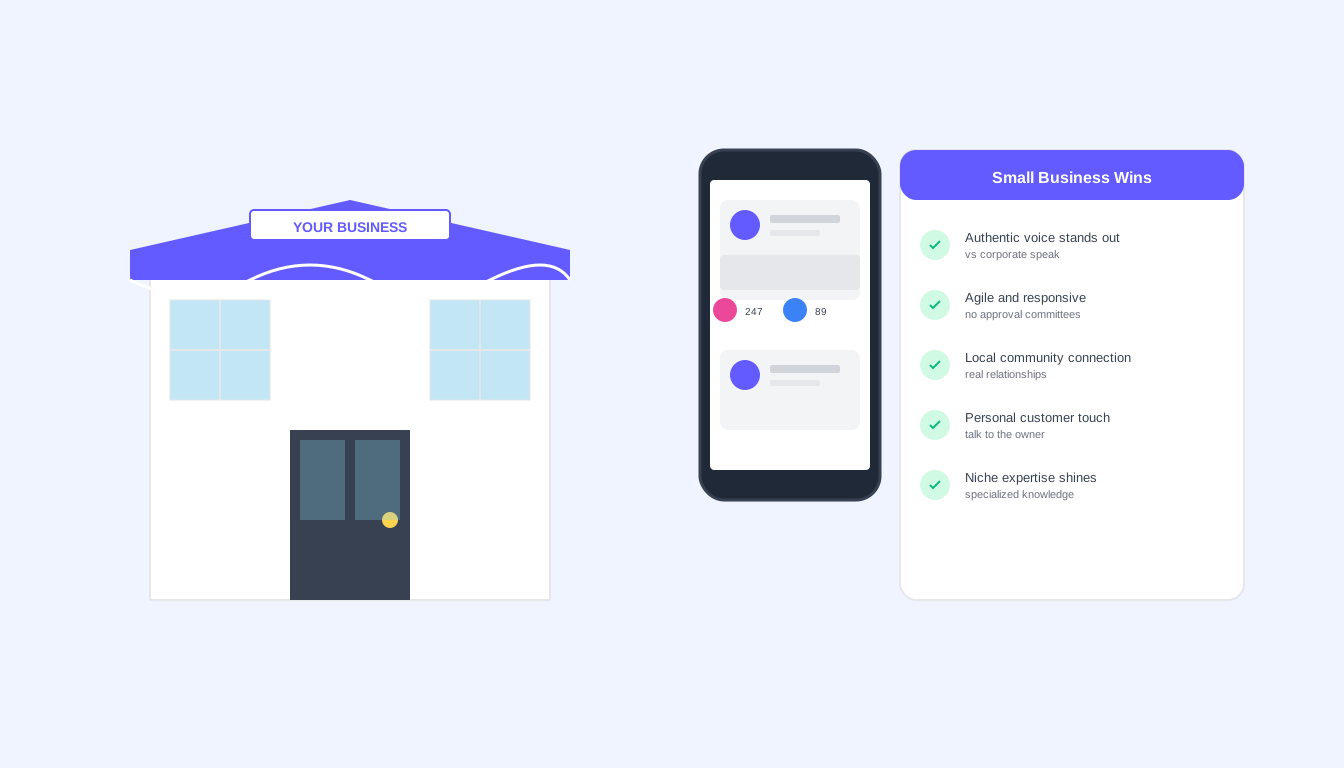
Your Small Business Advantages
Authenticity
People are tired of corporate-speak. Your genuine voice is refreshing.
Agility
No approval committees. See an opportunity? Act on it immediately.
Local Connection
You're part of your community in ways corporations never will be.
Personal Touch
Customers can talk to the actual owner. That's powerful.
Niche Expertise
You know your specific customers better than any big competitor.
Choosing Your Platforms (Less Is More)
The Biggest Mistake
Trying to be everywhere. Five mediocre presences lose to one strong one.
How to Choose
Where is your audience?
- B2B? LinkedIn first.
- Visual product? Instagram.
- Local service? Facebook and Google Business.
- Young consumers? TikTok or Instagram.
Where can you show up consistently?
- Pick platforms you can realistically maintain
- One great platform beats five neglected ones
What content can you create?
- Camera-shy? Stick to text-first platforms
- Love video? Prioritize Instagram/TikTok
- Great photographer? Instagram
Recommended Starting Points
| Business Type | Primary Platform | Secondary |
|---|---|---|
| Local service | Facebook + Google | |
| E-commerce | ||
| B2B services | X | |
| Restaurants/retail | ||
| Professional services |
The Minimum Viable Social Strategy
Weekly Time Investment: 2-3 Hours
Hour 1: Content Creation (batch monthly)
- Create/gather content for the month
- Write captions
- Schedule posts
Hour 2: Weekly Engagement
- Respond to comments and messages
- Engage with local businesses and customers
- Share relevant content
Hour 3 (Optional): Growth Activities
- Connect with potential customers
- Participate in community discussions
- Research competitors
Posting Frequency
Minimum: 3 posts per week on your main platform Better: Daily on main, 3x/week on secondary Don't exceed your capacity: Consistency beats volume
Content That Works for Small Business
Content Pillars (Pick 3-4)
1. Behind-the-Scenes
- Day in the life
- How you make/do what you do
- Meet the team
- Your workspace
2. Customer Stories
- Testimonials and reviews
- Customer photos/videos
- Before/after results
- Success stories
3. Educational Value
- Tips related to your industry
- How-to guides
- Common mistakes to avoid
- FAQs answered
4. Local/Community
- Local events
- Partner businesses
- Community involvement
- Neighborhood content
5. Your Story
- Why you started
- Challenges you've overcome
- Your values
- Personal milestones
Easy Content Ideas
- Share a customer review with your commentary
- Post a photo from your day with a quick insight
- Answer a common question
- Share a tip from your expertise
- Show a work-in-progress
- Celebrate a team member
- Share local news relevant to your audience
- Post a throwback to when you started
- Share what you're learning
- Respond to an industry trend
Content Creation Shortcuts
Repurpose Everything
One customer interaction can become:
- A post about the question they asked
- A review screenshot
- A before/after case study
- A tip based on their situation
One photo can become:
- An Instagram post
- A Facebook post
- A story
- Part of a carousel
Batching
Don't create content daily. Set aside one session per week or month:
- Gather all photos from the period
- Write all captions at once
- Schedule everything
- Only check in for engagement
Templates
Create templates for recurring content:
- "Meet the team" template
- Customer spotlight template
- Tip of the week format
- FAQ response format
AI Assistance
Tools like Pylot can generate caption options quickly. You provide the idea; AI helps with the words.
Building Local Presence
Google Business Profile
Priority: This matters as much as social media for local businesses.
- Complete your profile fully
- Add photos weekly
- Respond to every review
- Post updates regularly
- Use Google Posts feature
Facebook Local Strategy
- Join local community groups
- Participate genuinely (don't spam)
- Connect with other local businesses
- Share local events and news
- Use location tags
Instagram Local Strategy
- Use location tags on every post
- Follow and engage with local accounts
- Use local hashtags
- Partner with local influencers
- Feature local customers
Handling Limited Resources
Free Tools That Work
Design: Canva (free tier is sufficient) Scheduling: Many platforms have native scheduling Photos: Your smartphone camera AI Writing: ChatGPT free tier for ideas
What to Spend On (When Ready)
First priority: One scheduling/management tool (like Pylot) Second priority: Occasional boosted posts for reach Third priority: Photography for key assets
Time-Saving Tips
- Respond to comments while waiting (doctor's office, pickup lines)
- Take photos throughout the day—build a library
- Use voice memos to capture content ideas
- Let customers create content for you (UGC)
- Don't perfect—done beats perfect
Common Small Business Mistakes
Mistake 1: Selling Too Much
Your feed shouldn't be all promotions. Follow the 80/20 rule: 80% valuable content, 20% promotional.
Mistake 2: Ignoring Comments
A comment is a conversation starter. Ignoring them signals you don't care.
Mistake 3: Inconsistency
Posting 10 times one week, nothing the next. Pick a sustainable pace and stick to it.
Mistake 4: Being Too Formal
You're not a corporation. Let your personality show.
Mistake 5: Not Asking for Reviews
Happy customers often just need a nudge. Ask them to share their experience.
Mistake 6: Comparing to Big Brands
You're not competing with Nike. Compare yourself to other small businesses in your space.
Measuring What Matters
Metrics That Matter for Small Business
Awareness: Reach and follower growth Engagement: Comments, shares, saves, messages Action: Website clicks, calls, directions, bookings Revenue: Sales attributed to social
Skip the Vanity Metrics
Don't obsess over follower count. 500 engaged local followers beat 10,000 random followers.
Simple Tracking
- Ask new customers: "How did you hear about us?"
- Track website traffic from social
- Monitor direct messages and their outcomes
- Note which posts drive actual business
Growing Without a Budget
Organic Growth Strategies
1. Engage genuinely Comment meaningfully on others' posts. Don't spam—add value.
2. Partner locally Cross-promote with complementary businesses.
3. Encourage sharing Make content shareable. Ask customers to tag you.
4. User-generated content Feature customers. They'll share when featured.
5. Consistency compounds Showing up regularly builds momentum over time.
When to Consider Ads
Small ad budgets can work when:
- You're promoting a specific offer
- You want to reach beyond followers
- You're testing what resonates
- You have a clear goal and way to measure
Start with $50-100 experiments before committing more.
Social Media During Busy Seasons
Pre-Busy Season
- Batch create content in advance
- Schedule everything possible
- Set up auto-responses for messages
- Create templates for common responses
During the Rush
- Focus on engagement over posting
- Use stories for quick updates
- Respond to comments briefly
- Don't disappear entirely
Post-Rush
- Share behind-the-scenes from the busy time
- Thank customers
- Share testimonials collected
- Resume normal posting rhythm
Getting Help
When You're Ready to Delegate
Option 1: Virtual assistant
- Train them on your voice and approach
- Provide templates and guidelines
- Review before posting initially
Option 2: Family member/friend
- Clear on expectations and compensation
- Professional boundaries matter
Option 3: Local marketing student
- Enthusiasm and current knowledge
- Needs guidance and management
Option 4: Part-time social media manager
- When revenue justifies the cost
- Look for someone who understands small business
How Pylot Helps Small Businesses
Pylot was built for businesses like yours:
Time Savings
Generate weeks of content in one sitting. AI helps write captions; you just approve and personalize.
Affordable
Priced for small business budgets, not enterprise departments.
Easy to Use
No marketing degree required. Intuitive interface gets you posting fast.
Multi-Platform
Manage all your platforms in one place. No switching between apps.
Scheduling
Set it and forget it. Your content posts even when you're busy serving customers.
Brand Voice
Pylot learns how you sound. AI-generated content matches your authentic voice.
Your 30-Day Quick Start
Week 1: Foundation
- Choose 1-2 platforms to focus on
- Complete your profiles fully
- Gather photos and content ideas
Week 2: Content Creation
- Create 2 weeks of content
- Set up a scheduling tool
- Schedule your first batch
Week 3: Engagement
- Respond to all comments/messages
- Engage with 10 accounts daily
- Join relevant local groups
Week 4: Evaluate
- What performed best?
- What was hardest to maintain?
- Adjust your strategy accordingly
Conclusion
Social media for small business isn't about perfection or keeping up with enterprises. It's about showing up consistently, being genuinely helpful, and letting your authentic personality shine.
Start small. Be consistent. Focus on your customers. The results will follow.
Ready to simplify your social media? Try Pylot free and discover how easy small business marketing can be.